Logging and Monitoring Backend Systems
1. Introduction
Backend systems are complex, and many failures are subtle. Users may see slow responses, intermittent errors, or inconsistent data without obvious patterns. Logging and monitoring provide the visibility needed to understand what is happening inside services, diagnose incidents, and track long term health.
This guide focuses on practical observability practices for backend APIs. It emphasizes structured logging, meaningful metrics, and actionable alerts rather than collecting as much data as possible. The goal is to design signals that support both day to day operations and rare incident investigations.
While specific tools vary, the underlying principles apply across logging frameworks, metrics systems, and monitoring platforms.
2. Who This Guide Is For
This guide is intended for backend developers, SREs, and operations engineers who share responsibility for keeping services reliable. It is useful whether you are setting up observability for a new system or improving an existing setup that has grown organically.
Engineering managers can also benefit from understanding what observability provides and what it does not, enabling more informed discussions about reliability targets and investment in tooling.
3. Prerequisites
Before applying the steps here, you should know how your services are deployed and where logs currently go, even if the answer is “local files on servers”. You should also have at least a basic metrics or monitoring system available, such as a time series database with dashboards.
Familiarity with common operational concerns, such as latency, error rates, and resource utilization, will help you define which signals are most important for your context.
4. Step-by-Step Instructions
4.1 Standardize Structured Logging
Begin by standardizing how your services write logs. Prefer structured logging formats such as JSON over free form text. Structured entries make it possible to filter and aggregate logs by fields such as request identifiers, user IDs, or endpoint names.
Define a minimal set of common fields: timestamp, severity level, service name, environment, and correlation identifiers. For API requests, include method, path, status code, and duration. Be careful not to log sensitive data such as passwords, full tokens, or secrets.
4.2 Introduce Request Correlation
To trace a single request across multiple services, implement correlation identifiers. Generate an ID when a request enters your system and propagate it through internal calls and logs. Many HTTP frameworks support this pattern via middleware or filters.
With correlation in place, you can reconstruct the path of a request during debugging by searching for its ID across log streams. This is particularly valuable in microservice architectures where a single user action may touch multiple components.
4.3 Define Key Metrics
Next, define metrics that reflect the health of your system. For APIs, the “golden signals” of latency, traffic, errors, and saturation are a useful starting point. Measure response times for key endpoints, request counts by status code, and resource usage such as CPU or database connection pool utilization.
Design metrics with consistent naming and labels. For example, use a common prefix for metrics from the same service and label them with environment or region. This consistency makes dashboards easier to interpret and reduces confusion when new team members join.
4.4 Build Dashboards and Alerts
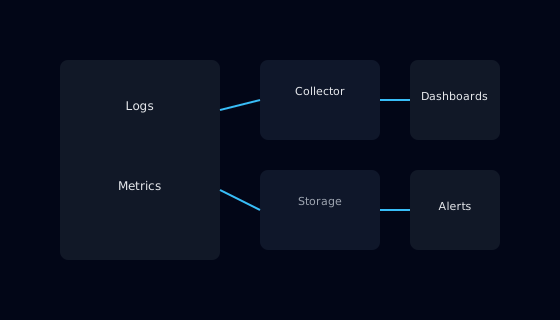
Create dashboards that present key metrics and logs in a structured way. Focus on views that help answer common questions: Is the service healthy right now? Are error rates increasing? Which endpoints are slow? Avoid cluttering dashboards with rarely used graphs.
Define alerts based on symptoms that users would notice, such as sustained increases in error rate or latency. Set thresholds that reflect normal variability to avoid constant noise. Alerts should be few but meaningful; each alert should have an understood response playbook.
4.5 Review and Refine Observability Regularly
Observability is not a one time setup. After incidents or significant changes, review how well logs and metrics helped you understand what happened. Identify gaps, such as missing context fields or metrics that were too coarse grained, and improve them.
Encourage developers to consider observability when implementing new features. Adding logging and metrics at the time of development is easier and more accurate than trying to retrofit signals during an outage.
5. Common Mistakes and How to Avoid Them
A common mistake is logging too much without structure. Massive volumes of unstructured logs are expensive to store and search but often provide little actionable insight. Focus on structured, targeted logs that support concrete investigative tasks.
Another mistake is creating dashboards and alerts that are rarely consulted or quickly ignored. If alerts fire too frequently or without clear meaning, teams learn to disregard them, which defeats their purpose. Regularly tune thresholds and remove obsolete alerts.
A third mistake is treating observability as a separate concern owned solely by operations. Effective observability requires collaboration between developers and operators so that signals reflect real application behavior and business priorities.
6. Practical Example or Use Case
Imagine a team responsible for an API that occasionally experiences spikes in latency. Initially, logs are written as free text to local files, and metrics are limited to basic CPU graphs. When incidents occur, the team has difficulty correlating user complaints with backend behavior.
By introducing structured logging with request identifiers and standard fields, as well as latency and error rate metrics per endpoint, the team gains a clearer picture. They build dashboards that show when and where latency spikes occur and configure alerts for sustained issues. During a subsequent incident, they quickly identify that a specific database query is causing delays and address it with an index change.
Over time, observability becomes part of their development workflow, leading to faster diagnosis and fewer prolonged outages.
7. Summary
Logging and monitoring are essential capabilities for operating backend systems safely. Structured logs, correlation identifiers, and carefully chosen metrics provide the raw material for understanding service behavior and diagnosing problems.
Dashboards and alerts turn this data into actionable information when designed thoughtfully and reviewed regularly. When observability is treated as a shared responsibility and integrated into everyday engineering practices, it enhances both reliability and developer productivity.